
How to Drill Into a Stone Shower Curb or Threshold for a Shower Door
Yes, you can drill into a stone shower curb or threshold for a shower door. Use a diamond bit, keep it wet, start with a small pilot hole and never use hammer mode.

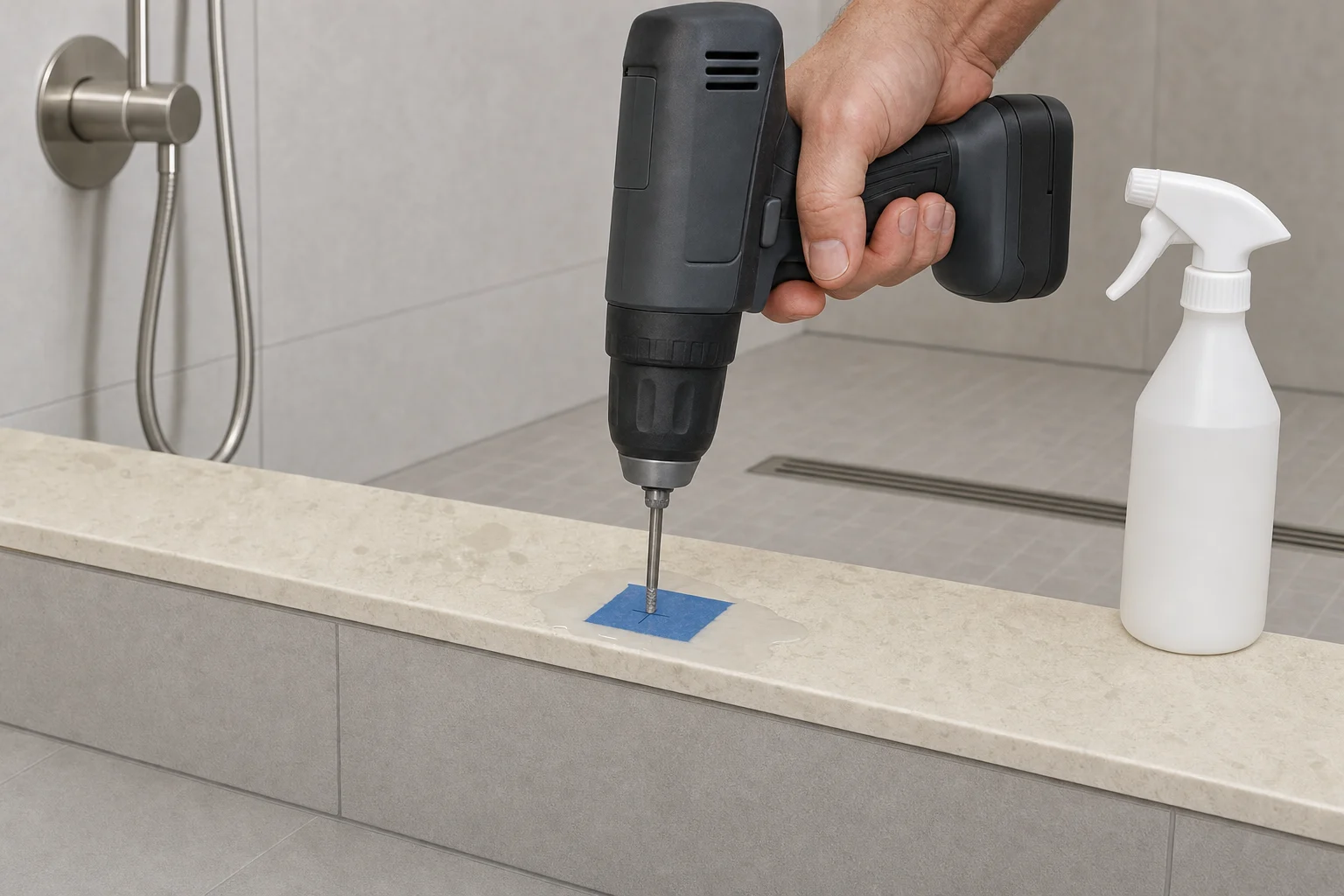
Yes, you can drill into a stone shower curb to mount a shower door, and it does not have to end in a crack. The short version: use a regular drill with the hammer function off, a diamond bit made for stone, keep the spot wet, open a small pilot hole first and then widen it to the size your door hardware needs. Marble, granite and quartz all drill cleanly this way. What breaks stone is the wrong bit, too much speed, too much pressure and dry drilling.
This is one of the questions we hear most from customers who have just received a curb top or threshold and have a glass door waiting to go on. Below is the method stone shops use, step by step.
First, Check Whether Your Door Needs Holes in the Curb
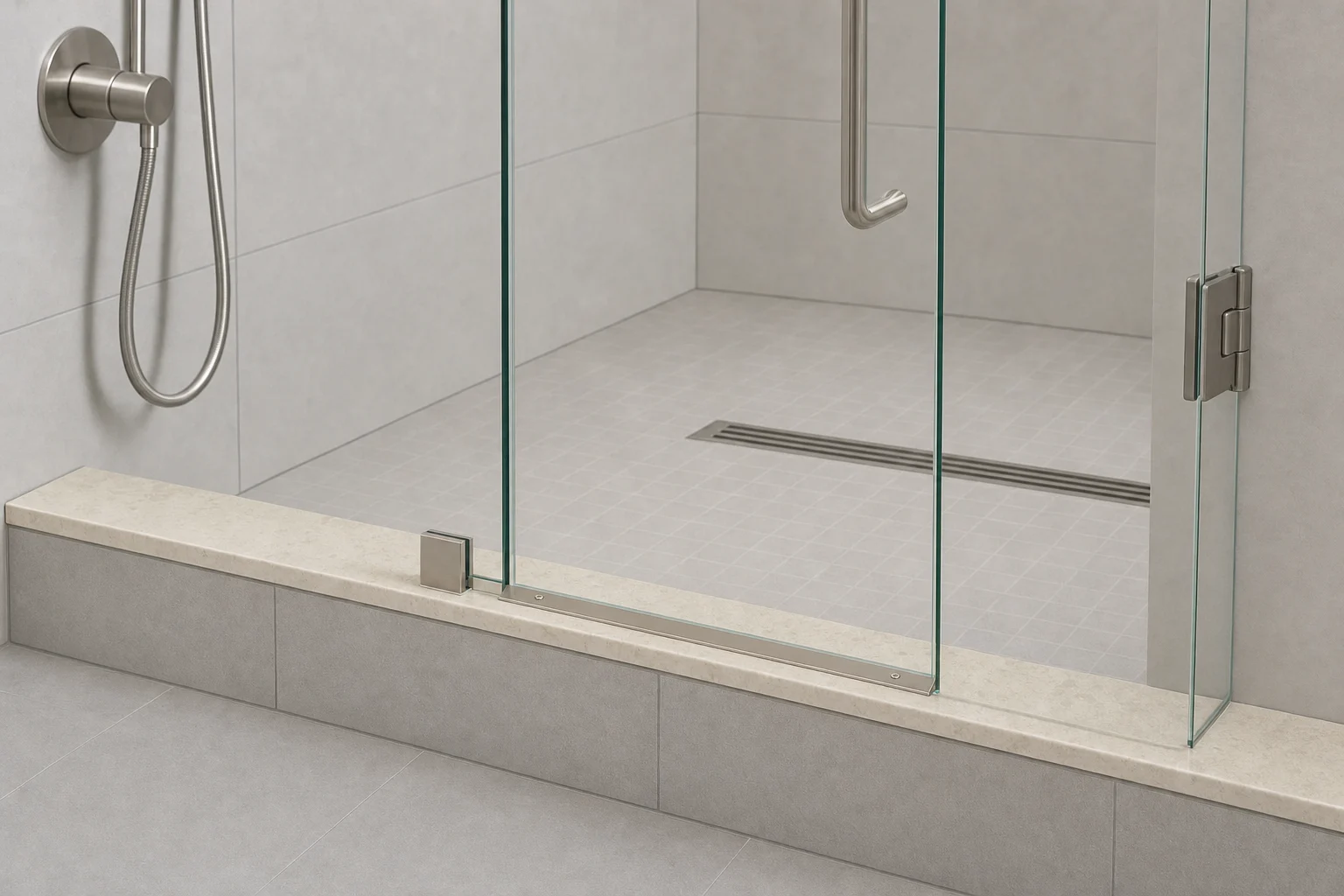
Read the shower door instructions before you pick up the drill. Many framed and sliding doors fasten to the walls with screws and only set the bottom track on the curb in a bed of silicone, so the stone is never drilled. Other models, including many frameless doors with a floor guide, clip or threshold strip, do need screws into the curb. The manual tells you how many holes, where, and what diameter.
If the manual gives you a choice, fewer holes in the curb is better. Every hole on top of a curb is a place where water can find its way down, so the ones you do drill must be sealed (see the last step).
Tools You Need to Drill Into a Stone Shower Curb
- A variable-speed drill. A normal corded or cordless drill is fine. If it has a hammer setting, switch it off. Hammer action is what cracks stone.
- Diamond drill bits for stone or tile. One small bit for the pilot hole (about 1/8 inch) and one in the final size your anchors need, often between 3/16 and 5/16 inch. Wood and metal bits will not do the job, and a worn masonry bit tends to skate and chip the surface.
- Water. A spray bottle or a wet sponge is enough for a few small holes.
- Painter’s tape and a pencil to mark the spot and help the bit stay put.
- 100% silicone sealant for the holes, plus safety glasses.
Before You Drill: Support, Position and Marking
The stone must be fully supported. The safest time to drill is after the curb top or threshold is installed and the mortar or adhesive under it has cured, so the piece is bedded along its whole length. A piece with a hollow spot under it, or one resting on two blocks on a workbench, can snap under drill pressure. If you have to drill before installation, lay the piece flat on a board that supports all of it.
Stay away from the edges. Holes close to an edge or an end are the ones that chip out. As a general rule keep at least about an inch of stone between the hole and any edge, and follow the door manual for the exact line.
Mark on tape, not on the stone. Put a strip of painter’s tape over the spot and mark the center on it. The tape gives the bit something to bite into so it does not wander across a polished surface. Do not use a center punch or a nail to make a starting dimple. A sharp tap is an easy way to crack marble.
How to Drill the Hole, Step by Step
- Wet the spot. Spray water on the mark so the bit starts wet. Water keeps the bit and the stone cool and keeps the dust down.
- Start the pilot hole with the small bit. Hold the drill straight, run it at low speed and let the bit grind its way in. Use light, steady pressure. The diamond does the work, not your weight.
- Keep adding water. Every few seconds lift the bit slightly, spray again and let the slurry wash out. If you see dry dust or the bit changes color, it is too hot. Stop and cool it.
- Widen the hole to the final size. Switch to the larger diamond bit and follow the pilot hole, again slow and wet. Going up in two steps puts far less stress on the stone than forcing a large bit in from the start.
- Ease off at the bottom. As the bit comes through the underside of the stone, reduce pressure so it does not punch through and chip. A standard curb top or threshold is 3/4 inch thick, so you will feel it break through quickly. If the screws have to go deeper into the curb below, follow the door manual for that part.
- Clean and dry the hole. Rinse or wipe away the slurry before it dries on the surface, then let the hole dry.
- Seal it. Fill the hole with 100% silicone before you push in the anchor and drive the screw, and tighten by hand at the end. An overtightened screw can crack stone just as easily as a bad drill bit.
Marble, Granite or Quartz: Does the Method Change?
The method is the same, the feel is different. Marble is the softest of the three and drills quickly, which is exactly why it needs a light hand. Granite is much harder, so the hole takes longer and the bit needs more water. Be patient and do not push. Quartz (engineered stone) is hard too, and it contains resin, so heat is the enemy. Dry drilling can scorch the area around the hole. Keep it wet from start to finish. If you are not sure what your piece is made of, our guide to marble vs quartz thresholds explains the difference.
Mistakes That Crack or Chip Stone
- Leaving the drill in hammer mode.
- Using whatever bit is in the toolbox instead of a diamond bit for stone.
- Drilling dry or at full speed.
- Leaning on the drill to make it go faster.
- Going straight to the large bit with no pilot hole.
- Drilling too close to an edge, or over a hollow spot under the stone.
- Overtightening the screws, or skipping the silicone in the hole.
Does the Same Apply to a Door Threshold?
Yes. A stone saddle threshold in a doorway is drilled the same way when you need to fix a door stop, a floor guide or a transition strip to it: diamond bit, water, small hole first, no hammer. The piece is the same 3/4 inch stone as a curb top, and it should be fully bedded before you drill.
Frequently Asked Questions
Can I use a regular drill bit on marble?
No. Wood and metal bits dull almost at once and overheat. Use a diamond bit sold for stone, tile or glass. They are inexpensive and available at any home center.
Should I use a hammer drill?
You can use the tool, but only with the hammer function switched off. Stone is drilled by grinding, not by impact.
Do I really need water for two or three small holes?
Yes. A spray bottle is enough. Water protects the bit, keeps the stone cool and stops fine stone dust from getting into the air.
Should I drill before or after the curb top is installed?
After is usually safer, because the installed piece is supported along its full length and you can mark the holes directly from the door hardware.
What if I do not want to drill it myself?
Shower door installers drill stone and tile every day. If the door is being professionally installed, let them drill the holes as part of the job.
The Right Piece Makes the Job Easier
To drill into a stone shower curb safely you need four things: a diamond bit, water, a small pilot hole and patience. A curb top cut to the exact size of your curb, fully bedded and level, gives the door hardware a solid base and gives you a clean surface to work on. You can order one in your own size on our Build Your Shower Curb page, browse all stone shower curbs and saddle thresholds, or build a custom threshold. Not sure about the size? See how to measure for a shower curb top. For anything else, check our FAQ or contact us.