Matte vs Polished Stone: Which Finish for a Bathroom?
Matte vs polished stone for a bathroom: how each finish looks, feels underfoot, handles water and cleaning, and where each one works best in a shower or doorway.

Matte vs polished stone comes down to sheen and everyday use. A polished finish is glossy, reflects light and makes the stone color look deeper. A matte finish is smooth but low-sheen, hides water spots and small marks better, and feels less slick when wet. In a bathroom, many people choose matte for surfaces that get wet and walked on, and polished for pieces that are mostly seen, not stepped on.
This guide explains how the two finishes differ, how each one behaves around water, and which finish fits each bathroom piece: shower curbs, shower seats, niche shelves, thresholds and vanity backsplashes.
What Is the Difference Between Matte and Polished Stone?
Both finishes start with the same slab. The difference is how far the surface is ground and buffed at the end.
- Polished: the surface is buffed until it shines like glass. Light bounces off it, so colors and veining look rich and high-contrast.
- Matte: the grinding stops before the shine appears. The surface stays smooth to the touch but has a soft, satin look with little or no reflection.
The stone itself, its thickness and its edge profile do not change. A 3/4 inch Absolute Black granite shower seat is the same piece in either finish; only the surface looks and feels different.
How Each Finish Looks in a Bathroom
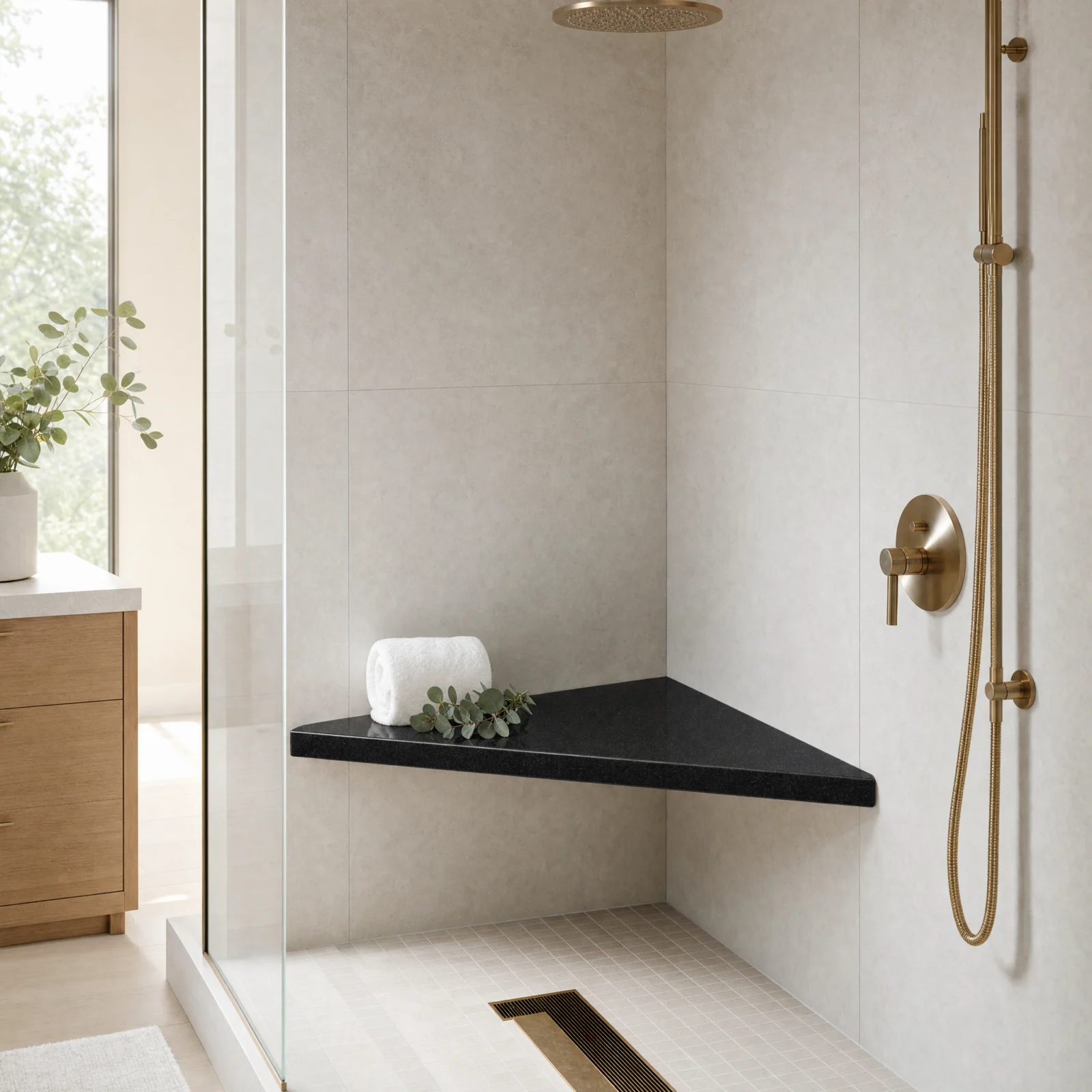
Polished stone catches light from windows and vanity lights. It makes a small bathroom feel brighter and gives dark stones like black granite a deep, mirror-like look. White marble and quartz look crisp and formal when polished.
Matte stone looks calmer and more natural. Colors read a little lighter and softer, and the veining blends in more. Matte suits spa-style, modern and minimalist bathrooms, and it pairs well with matte porcelain tile and brushed fixtures.
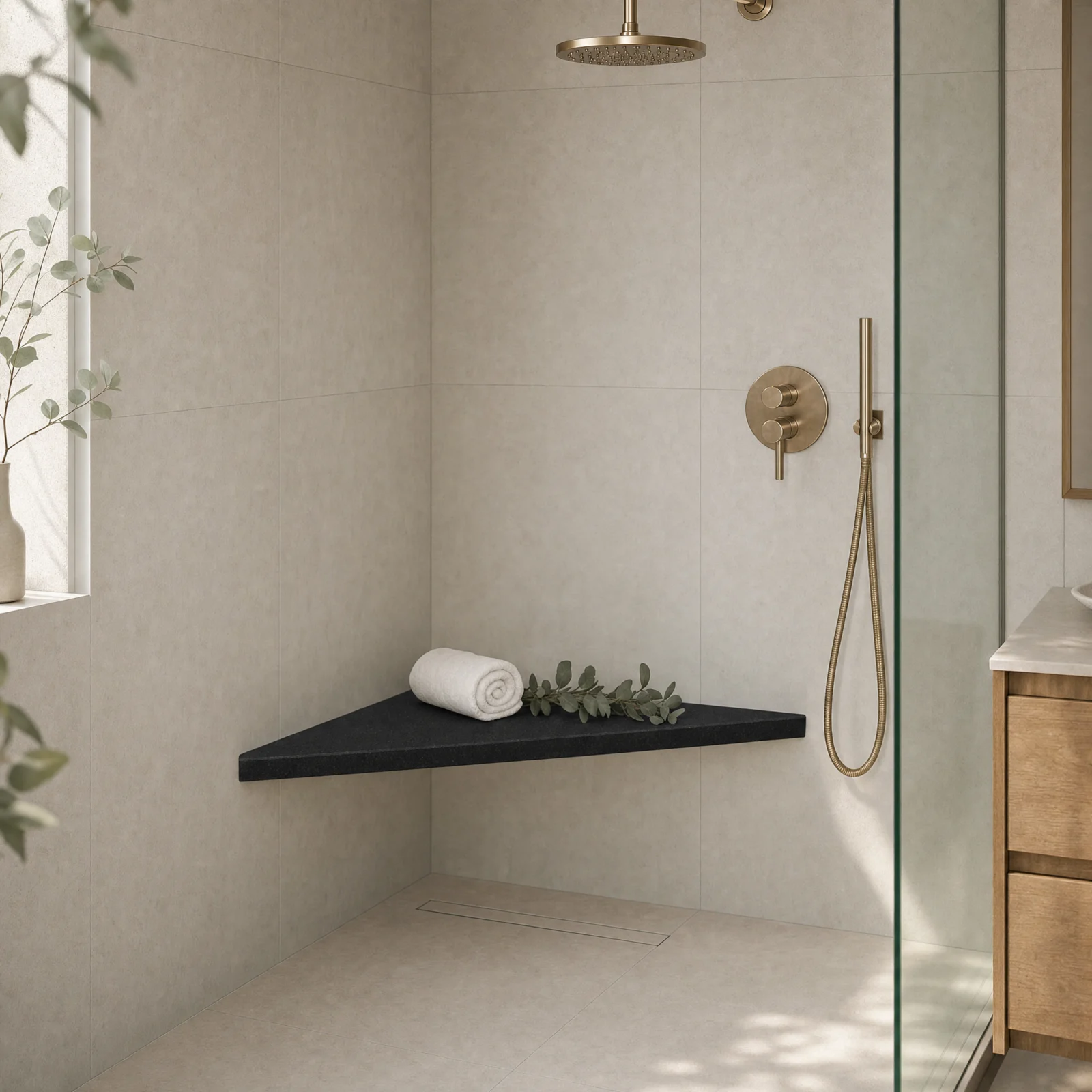
Compare the two photos: the same Absolute Black granite corner seat looks soft and quiet in matte (top) and glossy, with a reflection of the towel on its surface, in polished (here).
Water, Grip and Safety
Bathrooms are wet, so this is often the deciding point. A matte surface usually feels less slippery than a polished one when wet, because it is not as glassy. That makes matte a common choice for surfaces people step on or sit on, such as shower curbs and thresholds.
Keep in mind that no smooth stone is fully slip-proof. Whatever finish you choose, use a bath mat outside the shower and wipe standing water off curbs and thresholds.
Water Spots, Marks and Everyday Care
Each finish shows different kinds of marks:
- Polished shows water spots, soap film and fingerprints more easily, because any residue breaks up the shine. A quick wipe with a soft cloth brings it back.
- Matte hides water spots and light scratches better. On some stones, especially dark granite and dark quartz, oils from skin or products can leave darker smudges until they are cleaned off.
For both finishes, clean with mild soap and warm water or a pH-neutral stone cleaner. Avoid vinegar, bleach and abrasive powders.
Matte vs Polished Stone by Material
Marble
Marble reacts to acids such as citrus, some cleaners and some bath products. These leave dull “etch” marks. On polished marble, an etch mark stands out as a dull patch on the shine. On matte marble, it blends in much more. Matte marble is more open on the surface, so seal it regularly to help it resist stains. If you are still deciding between materials, our guide to marble vs quartz thresholds compares the two in detail.
Granite
Granite is hard and handles bathroom use well in either finish. Polished black granite has a deep, glossy look. Matte black granite looks soft and modern, but it can show fingerprints and oily smudges until wiped.
Quartz
Engineered quartz does not etch like marble and does not need sealing. Polished quartz is the easiest finish to wipe clean. Matte quartz looks more natural but can hold marks from oils or metal objects a little longer, which usually come off with a non-abrasive cleaner.
Which Finish for Each Bathroom Piece?
- Shower curb tops: stepped on with wet feet, so matte is the practical pick for most homes. Polished works if you want the curb to match a polished floor or vanity.
- Shower seats and benches: matte feels less slick when you sit or stand near it. Polished looks striking but shows water spots in daily use. Compare the Absolute Black Matte corner seat with the Absolute Black Polished corner seat to see the same granite in both finishes.
- Shower niche shelves: not walked on, so either finish works. Many people match the shelf to the curb or seat.
- Saddle thresholds: walked on every day, often with wet or socked feet, so matte is a common choice in bathroom doorways.
- Vanity backsplashes and window sills: mostly seen, not touched, so choose by look. Polished brightens the vanity area; matte keeps it calm.
Can You Mix Matte and Polished in One Bathroom?
Yes. A common approach is matte for wet, walked-on pieces (curb, threshold, shower seat) and polished for the vanity backsplash or window sill. Using the same stone color in both finishes keeps the room consistent while each piece suits its job.
How to Choose Your Finish
- Decide where the piece goes and whether it will be stepped on or sat on when wet.
- Match the finish of nearby tile and fixtures: matte with matte porcelain and brushed metal, polished with glossy tile and chrome.
- Think about cleaning: polished needs more wiping to stay spotless; matte hides daily water spots.
- Check which finishes your stone comes in. Some stones are offered in only one finish.
- See the stone in person if you can. Light in your bathroom changes how both finishes look.
Frequently Asked Questions
Is matte stone harder to clean than polished?
Not usually. Matte hides water spots better, so it looks clean longer. Polished wipes clean very easily but shows spots sooner. Both clean with mild soap and water.
Is polished stone slippery in a shower?
Polished stone feels slicker than matte when wet. For curbs and thresholds that are stepped on with wet feet, many people prefer matte.
Does matte marble need sealing?
Yes. Marble in any finish should be sealed in a bathroom, and matte marble benefits most because its surface is more open.
Can a polished stone be made matte later?
A stone restoration professional can refinish a surface, but it is much simpler to choose the finish you want before the piece is cut and installed.
Does the finish change the stone thickness or size?
No. Thickness, size and edge profile stay the same. Our standard thickness is 3/4 inch in both finishes.
Choosing Matte vs Polished Stone for Your Project
When comparing matte vs polished stone, think about how each piece will be used. Pick matte for wet surfaces people step on or sit on, and polished where you want shine and the piece is mostly seen. Ready to order? Choose your stone, finish and edge and enter your exact size with Build Your Shower Seat or Build Your Shower Curb, or browse all stone shower seats. Questions about a finish? Check our FAQ or contact us.